

Artists
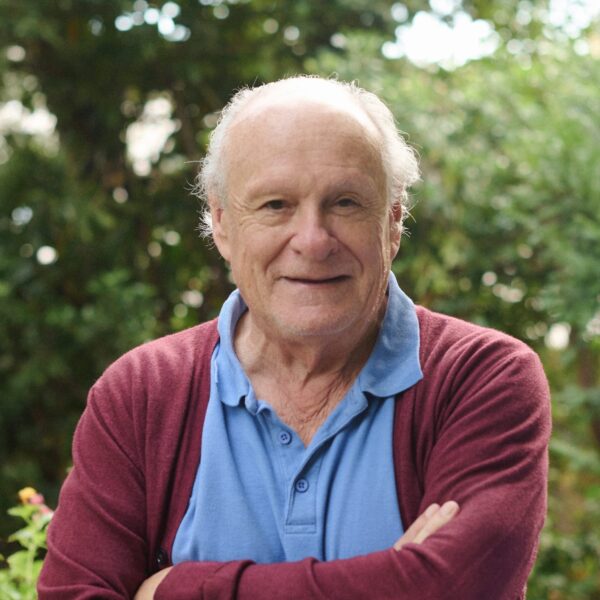
Ramon Herreros
Trained at the Massana School between 1962 and 1967 —where he studied painting and ceramics—, Herreros completed his artistic education at the Cercle Artístic de Sant Lluc and the Tàrrega Academy. In 1967 he joined the first class of the design school EINA, founded by figures such as Alexander Cirici Pellicer and Albert Ràfols-Casamada, and that same year co-founded, together with Alexandre Tornabell, José Luis Jubany and Jordi Morera, the Equip A, an art collective active until the early 1970s.
Although he never stopped drawing or taking photographs, he did not return fully to painting until 1980. In October 1982, he held his first solo exhibition at Galería Ciento in Barcelona —a turning point that consolidated his own visual language.
His work, initially marked by a highly personal and recognizable abstract symbolism, gradually evolved toward a refined figuration. In 1996, he surprised both critics and audiences with a quadruple exhibition in Barcelona —Galeries Senda, René Metras, Gaspar, and Boza Editor— where he presented his first figurative paintings: a new path combining his classical painterly approach —transparencies, subtle chromatic nuances— with a non-naturalistic representation of female bodies, mountains, and trees.
Since then, Herreros has developed a universe where figure, architecture, and organic form coexist with an expressive austerity that invites silence and contemplation. The tension between gesture and structure, between glaze and light, between presence and distance, gives his painting a metaphysical and timeless quality.
His works are held in several museums and private collections, and his career, sustained over decades, shows remarkable formal and conceptual coherence. From his studio in Barcelona, he continues a search that, more than stylistic, has become a way of inhabiting time itself: to look, to distil, to paint.
